
Chapter 1
The kid with the cheat sheets
I grew up in Monheim, a small town in Germany. My parents moved there from Russia before I was born. In school I wasn't bad - just strategically lazy. I didn't do homework, and I had no interest in memorizing facts I could Google in 10 seconds. So I cheated. I built cheat sheets in tiny font, printed them, cut them out, and stashed them in my pockets.
I got caught twice. Both times by my French teacher. Once because I threw the cheat sheet on the ground after the test - exactly where I was sitting. Not my proudest moment. I still finished with a 2.3 Abitur, which is roughly a 3.3 GPA.
After school, the path was obvious: university. My parents went. My sister went. My brother was already there. I didn't know there was an alternative. I had a vague interest in "media," so I applied to anything with the word in the title and landed in Media Technology at the Technical University of Cologne. First week, I realized it was advanced math, programming, and engineering. Not the media I meant.
Around then I bought a 20-year-old BMW for EUR 2,000 and paid for it with brutal waiter shifts. Everyone said I was stupid. I didn't care - that car made me feel free.
Bad financial decision. Great life decision. I don't regret it at all.
I dropped out and tried again with a degree called "Social Sciences: Media, Politics & Society." Sounds fancy. It wasn't. The future it pointed to was unpaid internships, low-paid communication jobs, or managing the Twitter account of a government office with 37 followers.
I didn't want any of that. I wanted something different.
Chapter 2
Two founders, a pile of pans, and me
In my fourth semester we had to do a 3-month internship. Most people secured theirs months in advance. I applied a week before. "Marketing" sounded kind of cool, startups sounded fun, and I found a local cookware startup that called itself a "lifestyle brand" - probably to make "we sell pans" sound more interesting.
It was the two founders and three interns - who all left within a couple of days. Suddenly it was just me and two overwhelmed founders who had just launched. No onboarding. No training. Just "Hey, we need help - figure it out."
So I did. Email marketing. Meta ads. Social content. PR outreach. I even went to markets and trade shows to sell pans in person, one-on-one, to real people. I had no clue what I was doing. And I loved it.
That internship changed my life. It introduced me to funnel-building, media buying, sales. I fell down the YouTube marketing rabbit hole, read Dotcom Secrets on the train, listened to agency courses in the gym. I didn't know what I was building yet - but I knew I wanted to build something.
Chapter 3
Building in secret
First try: dropshipping. Then I learned that in Germany, if something goes wrong with the product - even when you're just the middleman - you're legally liable. Not for me.
I pivoted to lead generation for local gyms. Cold outreach, free trials: "I'll run your Meta ads for free and generate you leads - just cover the ad spend." It worked. Clients signed. A few grand a month started coming in.
And I told no one. Not my friends. Not my parents. I was scared it wouldn't work. What if I burned someone's money? What if I looked like a fraud? Even with paying clients, I kept waiting for the floor to collapse.
My friends kept asking: "You're still finishing university, right? What's your Plan B?" So I stayed in school. Not because I believed in the degree - I knew I'd never use it - but because I didn't want to disappoint anyone.
Then COVID hit, and I lost every gym client overnight. Total wipeout.
If you run a brand, you know this feeling. The imposter voice doesn't retire when you pass $1M or $5M. It changes topics. Later it says: "My numbers are probably wrong, and someday everyone will find out." Hold that thought - it's where this story ends up.
Chapter 4
The $12,000 bet
I didn't have a traditional mentor. I had YouTube, and way too many courses I barely implemented. Then I found Client Ascension - a coaching program for agency owners whose guarantee at the time was: add $10K/month to your revenue in 6 months, or you don't pay.
It cost me $12,000. The biggest financial commitment of my life. The previous record was the EUR 2,000 BMW, remember?
I talked to my girlfriend, hoping she'd talk me out of it. She said: "If you think it'll help you scale the agency, you should do it."
I hoped she'd talk me out of it. She didn't. So I had to go all-in.
I didn't have the money. I took the $2K/month payment plan anyway. And it changed everything - not because of the information, but because of the room: 6- and 7-figure agency owners, actual practitioners instead of people selling the dream, daily calls with experts, an accountability coach. That was the mentorship I needed.
Chapter 5
Day three
In January 2024, everything changed. My girlfriend Joanna started her first "real" job after finishing her business law degree. On day one, she called me crying. Toxic culture - everyone pretended to be friends and talked behind each other's backs - and false promises about remote work. On day three, she quit.
I looked at her and said: "Why don't you just work with me?"
And she did. That moment marked the transition. It stopped being a freelance hustle and became a real business. Suddenly I wasn't just doing this for me - I was responsible for someone else's livelihood. Now it had to work.
Five months later, we hired another full-time team member. One year later, we were a team of 8.
Chapter 6
The voice
Hiring was hard. It wasn't the hardest part. The real struggle was internal.
Imposter syndrome kicked in hard. I'd look at my team and think: they expect me to lead, and I'm a guy in his 20s. Who am I to tell anyone what to do? Same with clients. Some were companies that had been around for decades - one for a century - with full leadership teams and MBAs. And here I was, the guy who used to cheat in French class, telling them their marketing strategy didn't work.
The voice in my head: "You're not qualified. Don't screw this up. Everything falls apart the moment they realize you don't really know what you're doing."
Chapter 7
May 2025
By early 2025, I was completely stretched. Too many responsibilities, too many moving pieces. Every day was a blur of Slack, emails, calls, reports, team check-ins, client check-ins, and putting out fires. I stopped enjoying the work. I even started losing motivation to train - and I'd been lifting for over 10 years. It was my outlet.
Every Sunday, a wave of anxiety. Not because anything was broken, but because Monday was coming. Pressure. Expectations. People counting on me. Something had to break.
And then it did. In May 2025, we lost three clients in a single week. Just like that, 20% of our revenue was gone.
I felt it physically - numb legs, heavy chest, knots in my stomach. And my brain spiraled straight to the deepest fear: maybe I'm not actually good at this. Maybe I've been faking it the whole time. Maybe this is the moment everyone realizes it.
Here's the strange part: I also felt relieved. We had just been at our highest revenue ever, with more clients than ever - and that scared me too. Part of me thought: at least now we're back at a level I know how to manage. Then came the darker thoughts. Maybe I'm not built for this. Maybe I should go back to freelancing. Keep it small. Stay safe.
That wasn't a revenue drop. That was an identity crisis.
Founders don't talk about this enough. Losing 20% in a week does something no dashboard shows: it rewrites the story you tell yourself about whether any of it was real. If you've been there - a winning ad that died, an account that fell off a cliff, a quarter that erased a year of confidence - you know exactly what that week felt like.
Chapter 8
Thoughts aren't facts
The breakthrough came in a conversation with one of my coaches. I told him the truth: "I don't feel like I'm good enough to lead a team." He said something simple that cracked me open:
"It's okay to feel that way. Just do it anyway."
Then he challenged me to stop guessing what people thought of me - and ask. So I sent my team an anonymous questionnaire. No fluff, just raw truth. I braced myself.
What came back was support. Respect. Belief. They liked working with me. They trusted me. I talked to clients - same thing. Then other agency owners started DMing me, thanking me for my content.
And it hit me: my thoughts aren't facts. I had been making up a story in my head - and it wasn't even true.
Nobody has it all figured out. There's no such thing as a perfect leader. There's just someone who shows up, fails, learns, and keeps going. Clients will leave. Ads will flop. You'll mess up. That's not failure. That's the job.
Chapter 9
The turnaround
I started acting differently. When a team member asked me what to do, I'd answer: "What do you think?" - and then go with that. I stopped reviewing every report. I let the team run client calls on their own. I taught them the long-term vision, then got out of their way. I stopped avoiding hard conversations, protected my calendar, and finally worked on the business instead of only in it.
I knew something had changed the day a team member hopped on a client call without even telling me. Handled it. Nailed it. Everyone happy. No crisis, no chaos - and I wasn't involved at all. The old me would have panicked. The new me was proud. And relieved.
I started moving faster, too. I tested a brand-new funnel and VSL at $150/day within a few days of the idea. I hired an executive assistant - not because I felt I deserved one, but because the business needed it to grow. I initiated the hard conversations I used to postpone.
Not ego. Not arrogance. Grounded clarity: I'm not here to do everything. I'm here to build something bigger than me.
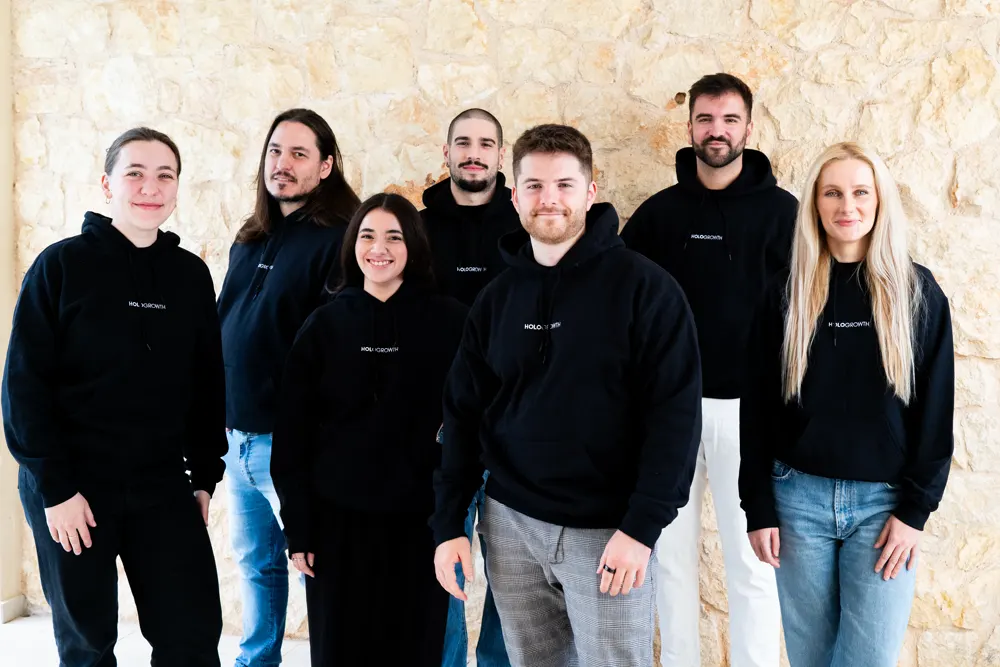
The control trap is the quiet one. Reviewing everything feels like quality control. It's actually the ceiling - on your team, and on your brand. The founder who has to personally approve every number, every creative, every call is usually the bottleneck they're paying everyone else to remove.
Chapter 10
What this has to do with your brand
Here's the part that matters if you run one.
The thing that ended my identity crisis wasn't a pep talk. It was evidence. An anonymous questionnaire replaced the story in my head with data - and the story turned out to be wrong.
Brands run on stories too. "Meta says 4x, so it's working." "We can't cut that campaign, it's our best one." "Growth is fine, it's a creative problem." The platform version of your numbers is a story - and in the accounts we've audited, Google Ads typically overstates its contribution by 80-90% while Meta typically understates by 20-80%. I spent months making decisions about my own company from a story in my head. I won't let a founder do the same thing with their P&L.
That's why HoloGrowth is built the way it is. Diagnosis before spend. Numbers you own, in systems you own. And no long contracts holding anyone hostage - the work has to earn the spot, every cycle, the same way I had to learn that trust gets earned by evidence, not asserted.
The whole model, spelled out, is on the about page - and the incentive problem that makes agencies structurally unable to work this way is in The Agency Incentive Problem.